BeFungi
An educational platform that encourages junior designers to design sustainably.
Project Type
Duration
Methods
Tools
Problem
The environmental impact of digital products is growing rapidly, yet many junior designers lack awareness of sustainable practices. Befungi addresses this by helping them understand and reduce their digital carbon footprint.
Solution
Befungi is an educational platform that uses gamification and a fungi-inspired metaphor to teach sustainability. It guides users through curated content and visualizes their learning journey via a progress-tracking system.
Impact
The platform encourages sustainable design habits without compromising creativity. Future iterations will expand accessibility and community collaboration to further support junior designers.
PROBLEM
The widespread use of digital technologies, from cloud computing and data centers to everyday internet services, now contributes a measurable portion of global greenhouse gas emissions. According to recent studies, the digital sector accounts for about 3.4% of emissions and some projections estimate this share could
This footprint includes the energy required to power data processing, networks, and billions of connected devices worldwide. Recognizing this impact highlights the importance of sustainable design practices in reducing the environmental cost of digital products.
There are many reasons why designers do not choose sustainable solutions, but three key challenges stand out.
Existing sustainability resources feel complex or overwhelming, which prevents long-term habit building.
OBJECTIVES
Enable junior designers to develop an understanding of sustainable digital design in a motivating, approachable, and non-intimidating way. The platform should help them build confidence in their knowledge, explore sustainability at their own pace, and gradually integrate sustainable practices into their everyday design process, without feeling overwhelmed or restricted.
Integrate sustainable thinking into designers’ daily workflows without disrupting creativity or efficiency.
Measure engagement through content completion, progress tracking on MyFungi, and increased confidence in applying sustainable design practices.
RESEARCH

Lina — Primary User
Junior UX Designer | 1 year
Goals
Design more sustainably
Understand impact
Pain Points
Doesn’t know where to start
Sustainability feels complex
Mark — Secondary User
Mid-level Digital Designer | 3–6 years
Goals
Work efficiently
Apply practical knowledge
Pain Points
Sees sustainability as extra effort
Low tolerance for academic content

Insight 01 – Learning style
87.5% of participants identified as visual learners, while only 37.5% preferred text-based content.
Insight 02 – Motivation
59.1% stated that progress tracking is crucial for staying motivated.
Insight 03 – Social effect
Survey results showed that motivation is not only individual but also social, with participants indicating that peer behavior and support influence their engagement with sustainability.
PROCESS
Early Ideation
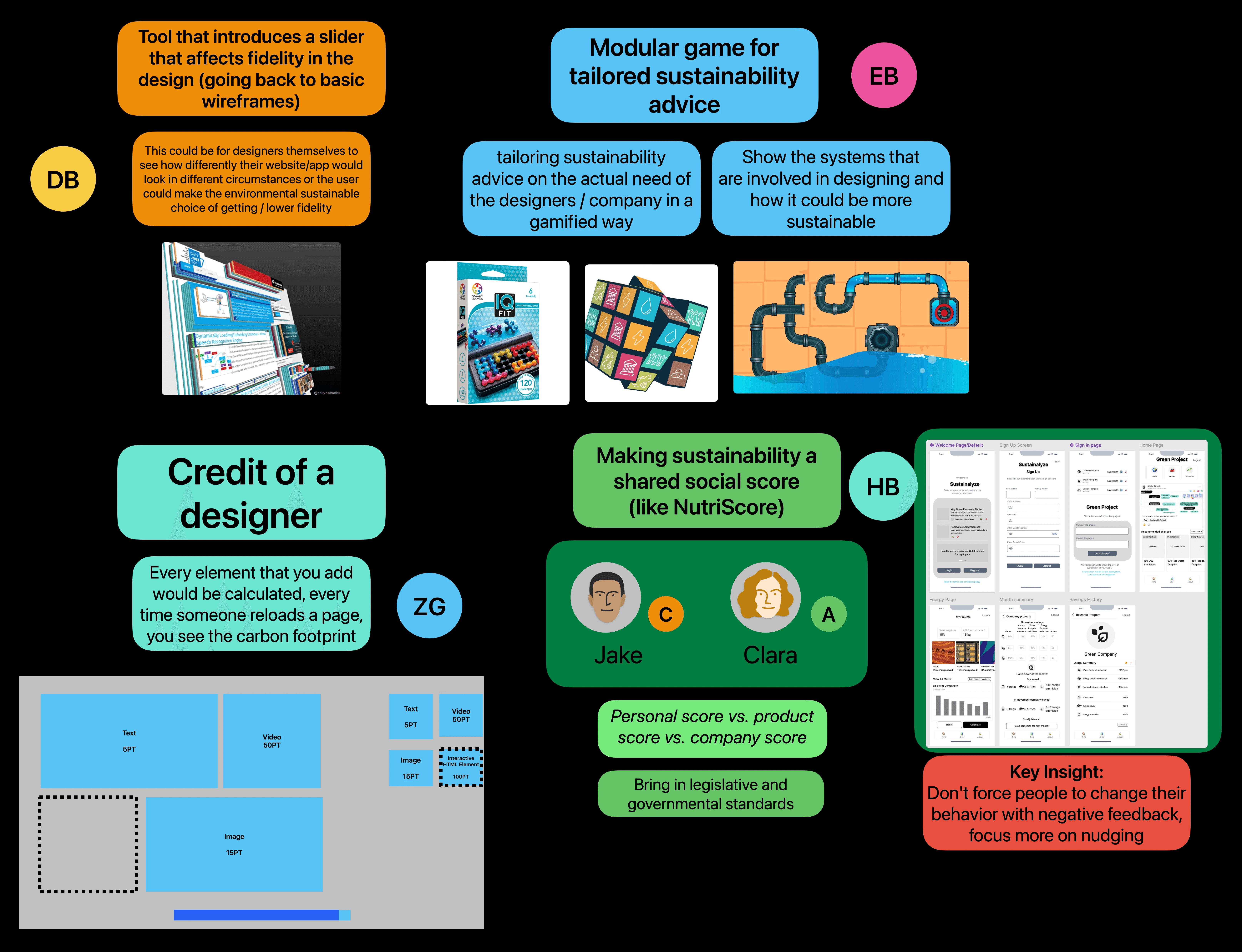
Based on our initial research, each team member explored an individual concept direction
We shared our concepts with each other and discussed their strengths, weaknesses, and feasibility
Through collective critique, we identified overlapping themes and opportunities
We decided to merge our ideas into a single, stronger concept
The chosen direction focused on a plugin that integrates into designers’ workflows and supports learning while designing
Workshop
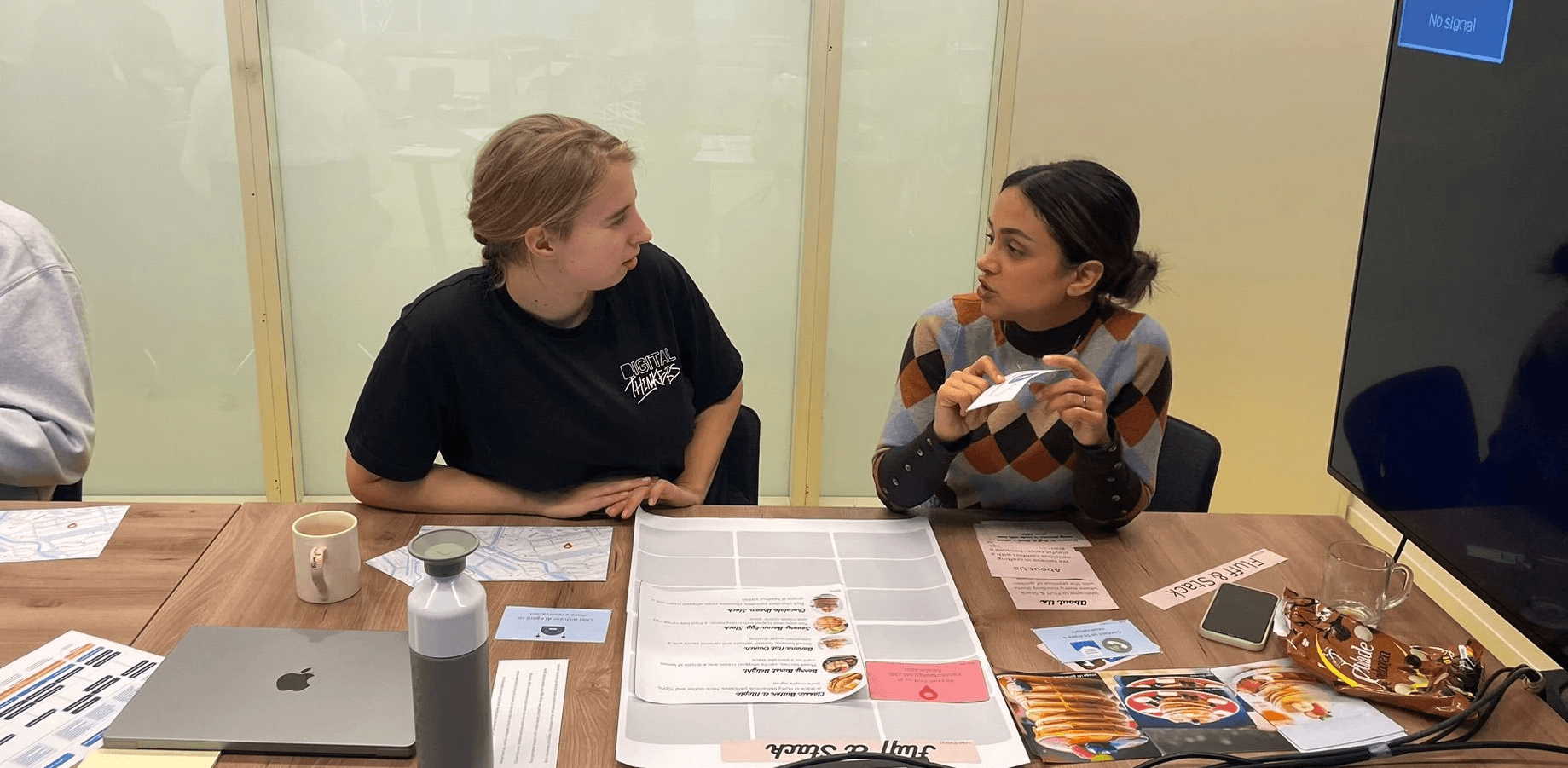
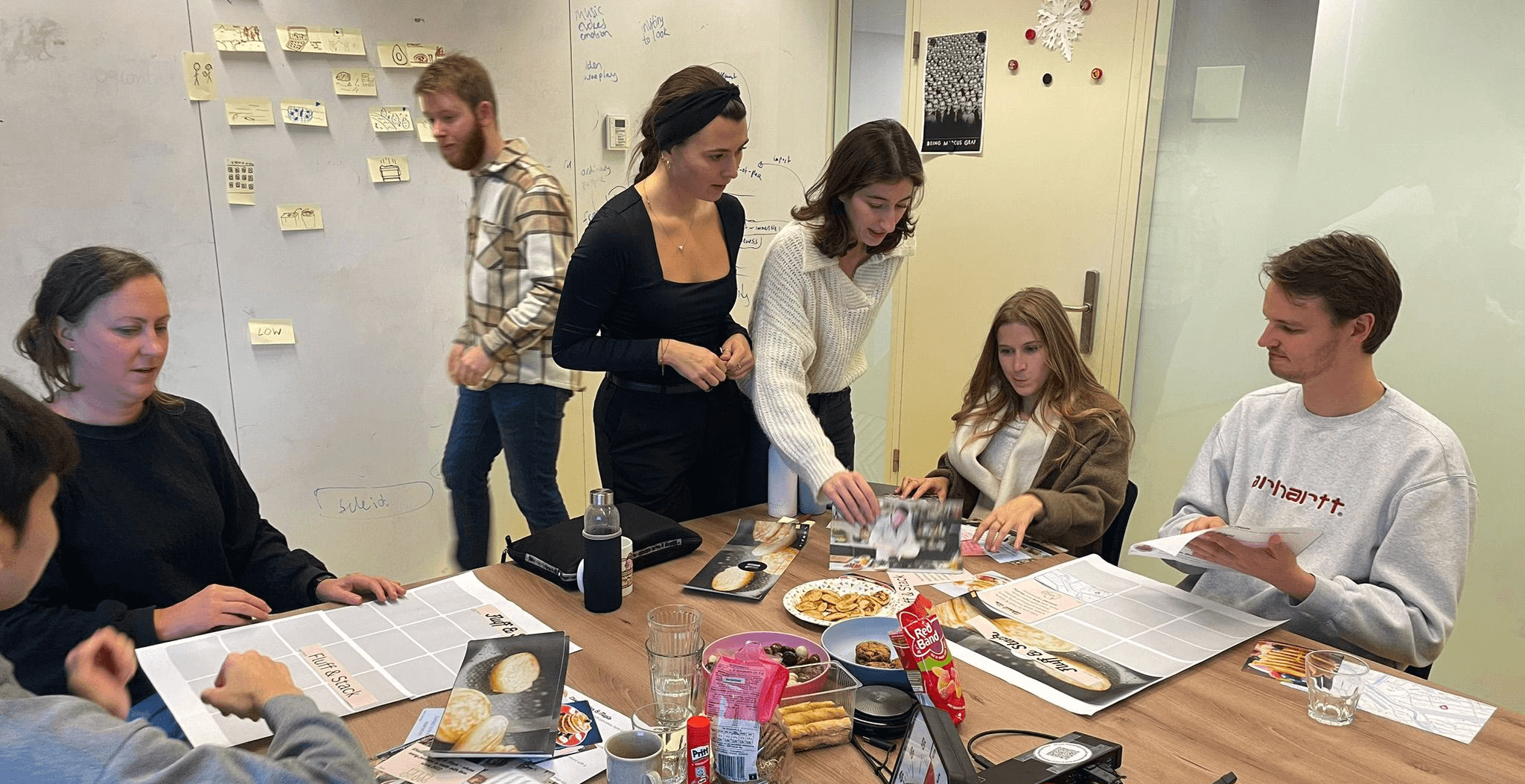
Conducted a workshop with 6 designers to test the plugin concept
Users interacted with a paper-based mockup of the website
While designing, they received warnings about sustainable design decisions
Participants were asked whether they would change their choices based on the warnings
The warnings also provided educational information on sustainability
Findings:
Users did not want to download a separate plugin
Users preferred not to be forced to change their design choices
Users appreciated the gamified presentation of sustainability, making a serious topic more engaging
Pivot to Learning Platform
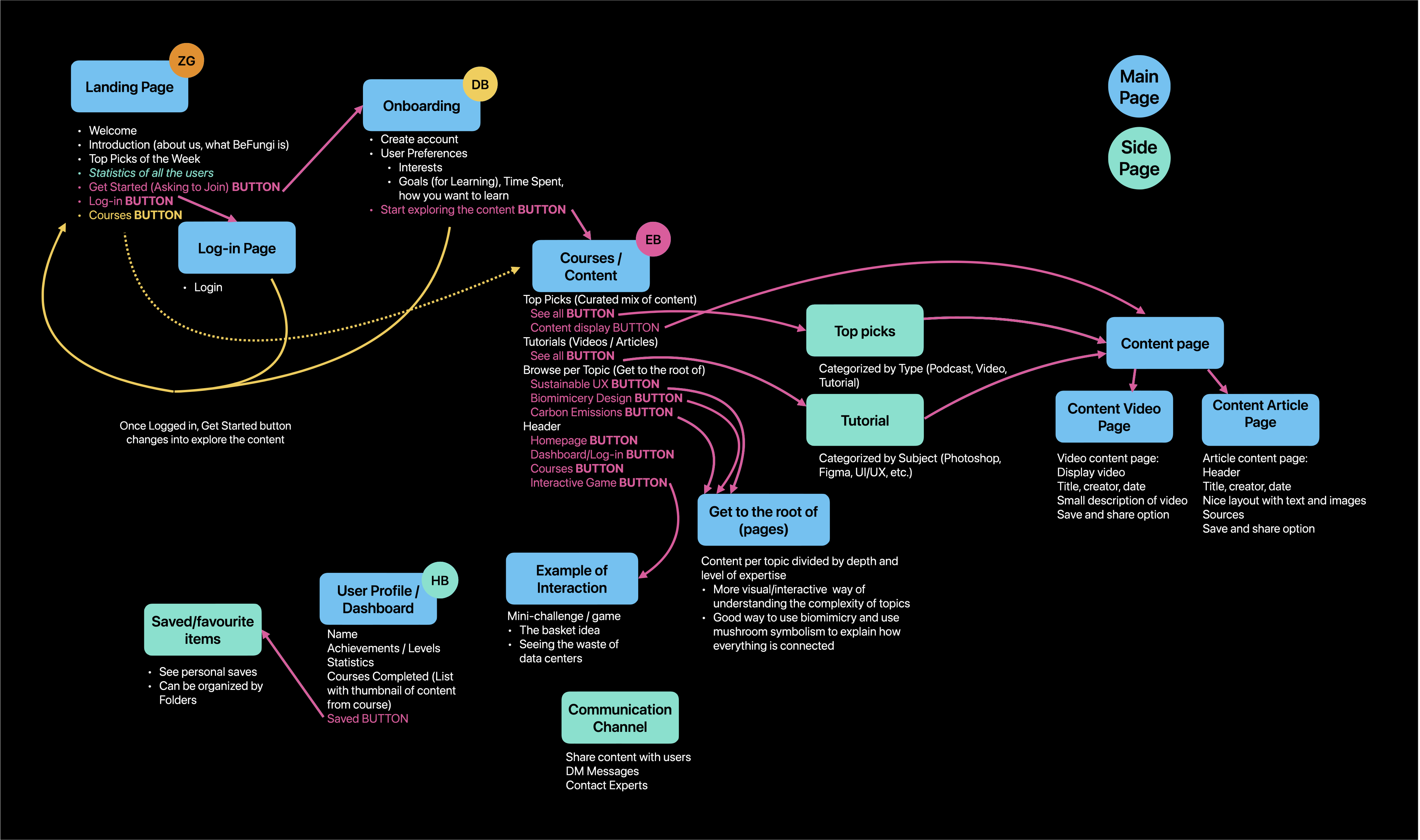
Based on workshop insights, we shifted focus from workflow intervention to education
Goal: Encourage designers without overwhelming them while retaining gamification
Explored platform structure through team discussions and concept sketches
Planned content flow, navigation, and gamified progress mechanics
Designed a system that balances learning, motivation, and autonomy
Design Metaphor
Inspired by biomimicry, we based the concept on natural systems
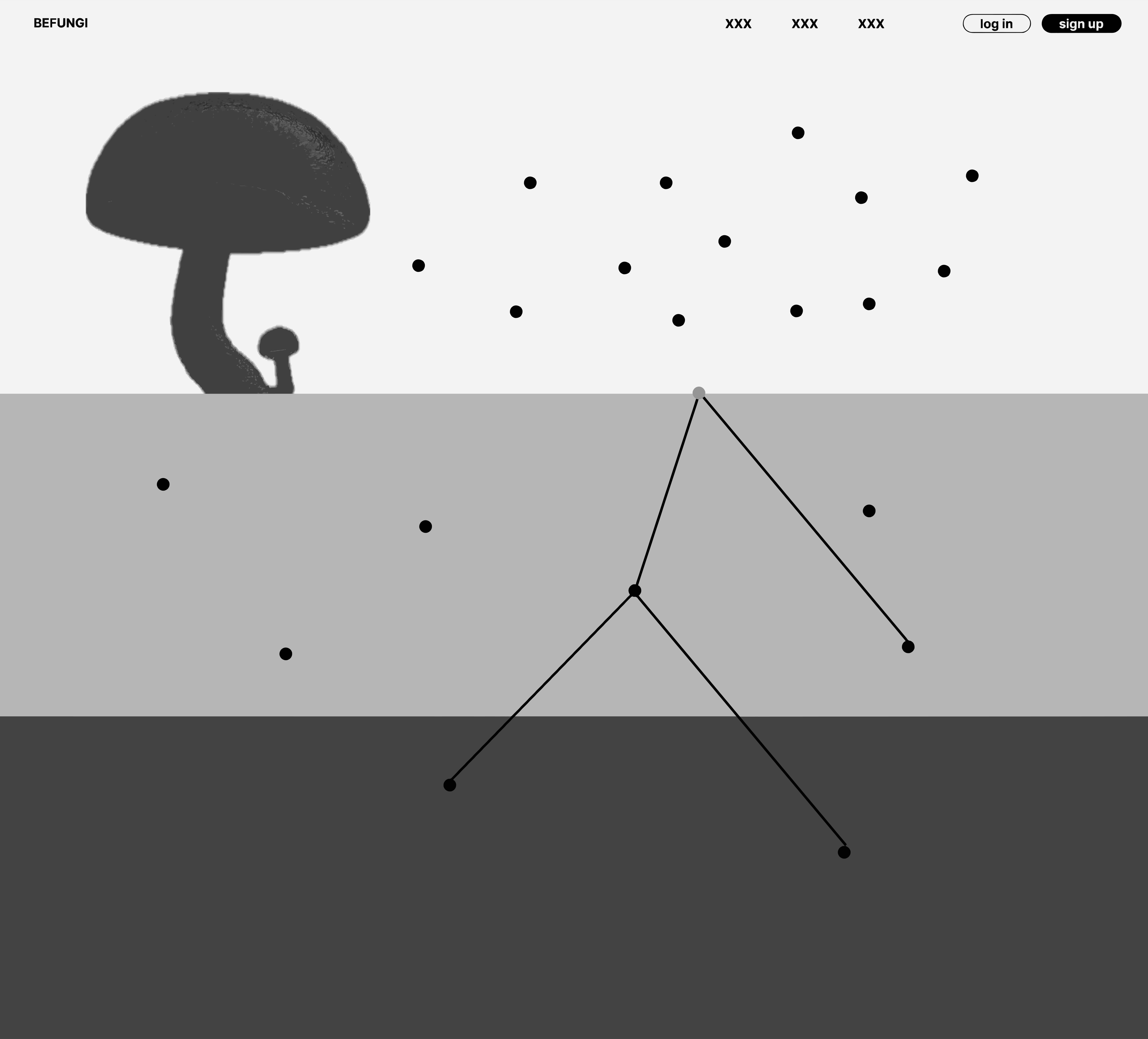
Abstracted underground fungal networks into a layered, interconnected metaphor
Used this system to visualize sustainable design practices in an intuitive way
Each topic represented as a “root” or “fungal branch,” showing how decisions are connected
Gamified growth mechanics integrated into the metaphor to reinforce learning and progress
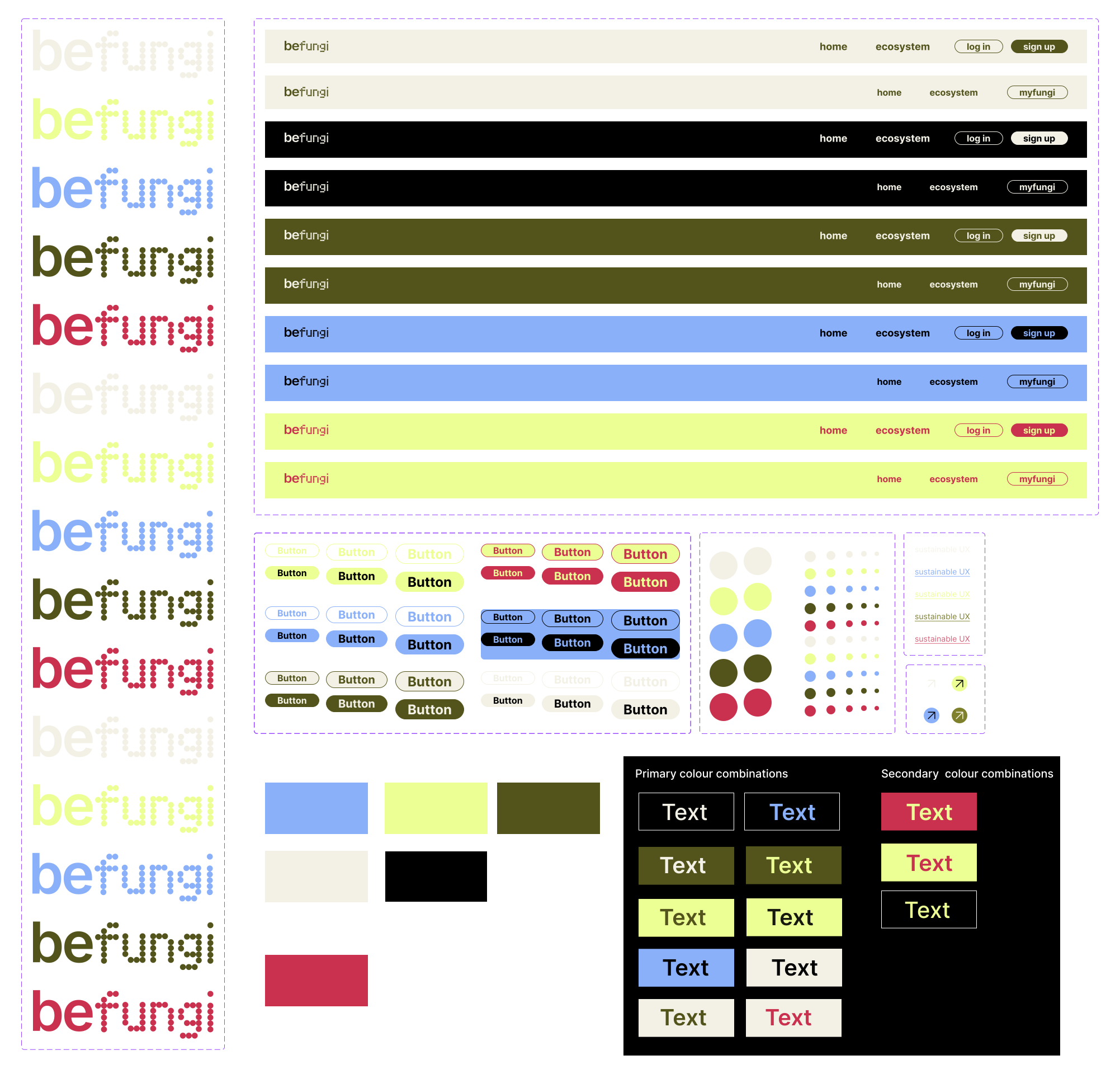
DESIGN APPROACH/GOALS
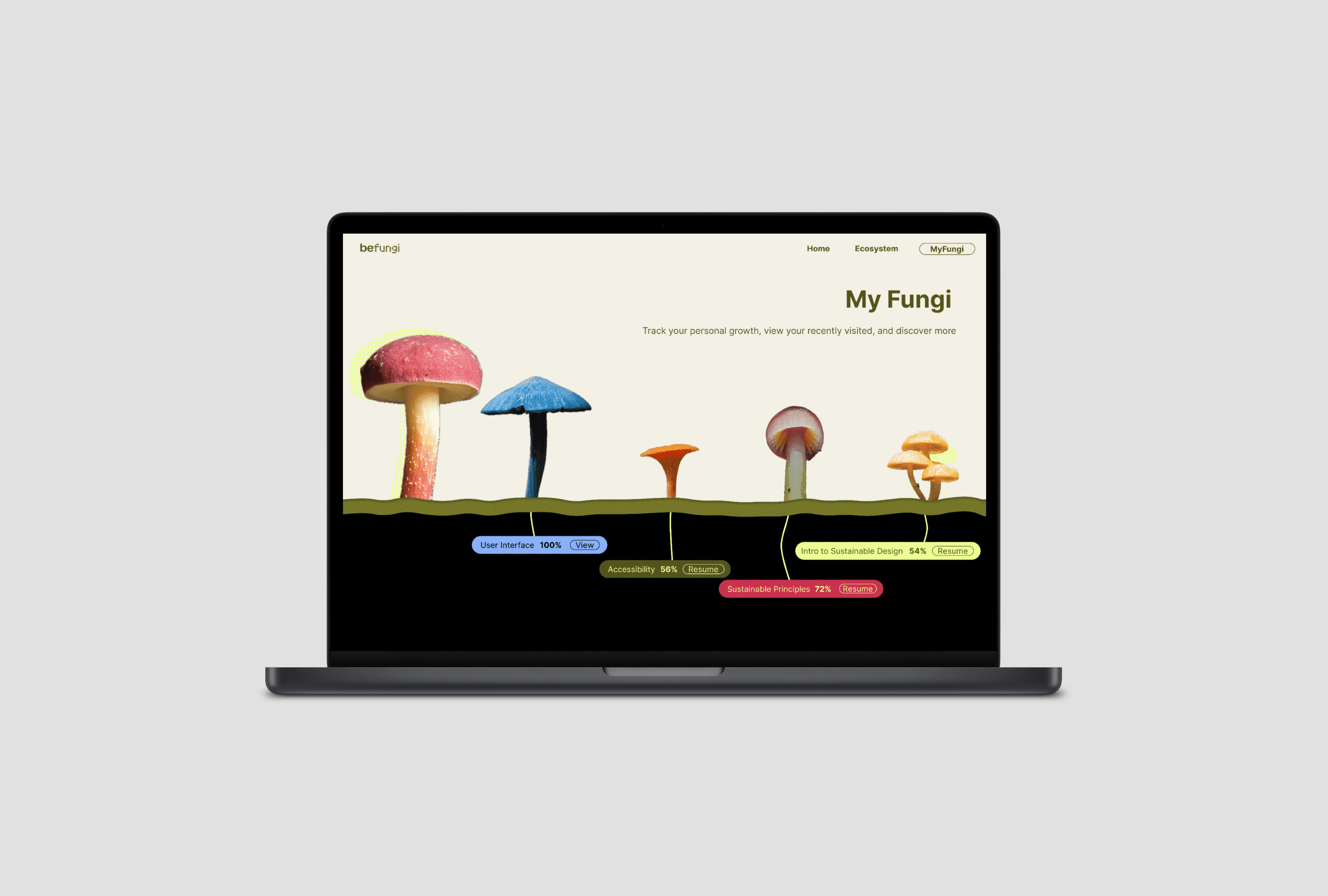
Each completed topic grows a unique mushroom, visualizing personal progress and reinforcing motivation through gamified learning.
Knowledge is structured as an interconnected fungal network, where individual design decisions relate to a larger ecosystem and global community of designers.
Knowledge is structured as an interconnected fungal network, showing how individual design decisions relate to a larger ecosystem and a global community of designers.

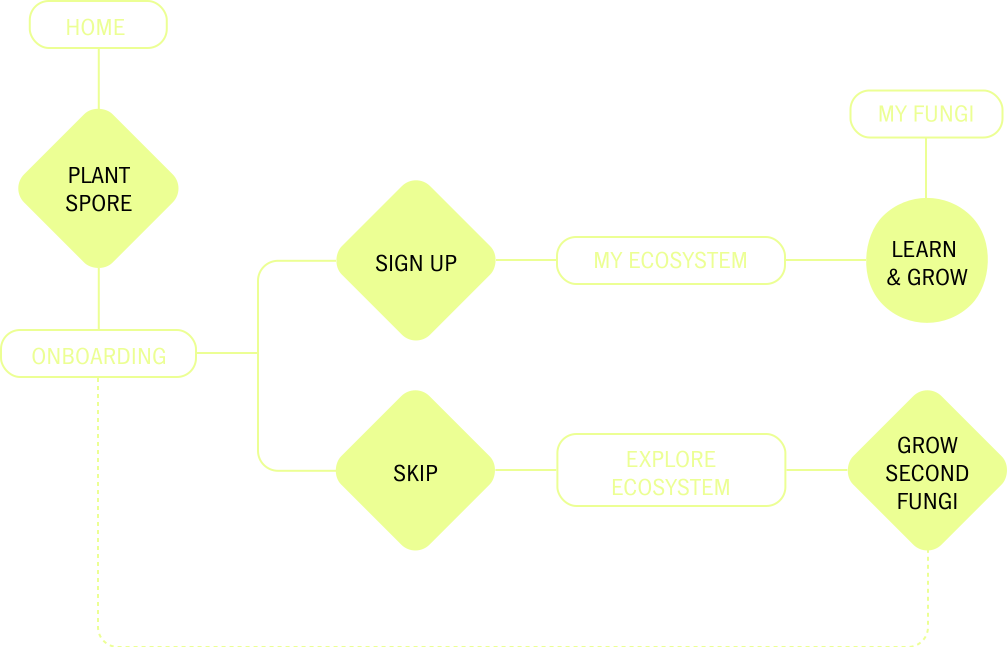
Homepage → Onboarding Interaction
Introduces users to the concept of digital sustainability and invites users to start their learning journey by planting a spore
The planted spore represents the first stage of the fungi metaphor
Users receive immediate feedback that their learning has begun, they can choose to sign up or skip and continue
After this step, users are taken to the Ecosystem page where exploration starts
MyFungi → Progress & Community
Displays the fungi the user has grown so far and each fungus represents a completed topic
Users can continue learning from ongoing topics or revisit completed ones
Shows the user’s current achievements and learning status
Introduces the World of Befungi section
Visualizes user progress on a global map alongside other designers and reinforces a sense of community and shared learning
Helps users feel motivated and not alone in their sustainability journey
Displays personalized content recommendations based on visited topics
Highlights globally popular content across other users’ ecosystems
FINAL PRODUCT
NEXT STEPS & REFLECTION
Designing Befungi highlighted the potential of alternative, non-linear learning systems for engaging designers with sustainability. While moving away from traditional, linear educational platforms initially felt uncertain, user testing showed that visualizing learning as growth increased both engagement and motivation.
Looking ahead, clearer onboarding and navigation would help users understand where to start and how to explore the platform more confidently. In addition, introducing an alternative, more conventional content discovery mode alongside the gamified experience could better support different learning preferences and encourage long-term engagement.
The project also revealed the importance of community in sustaining motivation. Future iterations could strengthen peer interaction by enabling designers to share insights, discuss challenges, and learn from each other, reinforcing the idea that sustainable design is a collective effort rather than an individual task.
Finally, this project emphasized that sustainability in digital design goes beyond visual decisions. Future development would focus on deeper sustainable web practices such as performance optimization, code efficiency, and low-impact infrastructure, ensuring that the platform itself aligns with the values it promotes.